古希腊七贤
外观
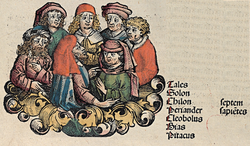
希腊七贤(古希臘語:οἱ ἑπτὰ σοφοί,羅馬化:hoi hepta sophoi),古代希腊7位名人的统称。儘管在古希臘廣為人知,且有數個版本,但现代名單主要來自第歐根尼的《哲人言行錄》。依第歐根尼為來源,現代人了解较多的只有立法者梭伦和哲学家泰勒斯两人,剩余五人是契罗、毕阿斯、庇塔庫斯、佩里安德、克萊俄布盧[1][2]:
| 城邦 | 人名 | 格言 |
|---|---|---|
| 雅典 | 梭伦 (Solon) | 避免極端 (Nothing in excess) |
| 斯巴达 | 契罗 (Chilon) | 莫妄想不可能之事 (Do not desire the impossible) 或 認識你自己 (Know yourself) |
| 米利都 | 泰勒斯 (Thales) | 只在乎穩定會帶來毀滅 (To bring surety brings ruin) 或 認識你自己 (Know thyself)[3] |
| 普里耶涅 | 毕阿斯 (Bias) | 人多反而壞事 (Too many workers spoil the work)、多數人皆惡人 (Most men are bad) |
| 林佐斯 | 克萊俄布盧 (Cleobulus) | 適度即至善 (Moderation is the chief good) |
| 米蒂利尼 | 庇塔庫斯 (Pittacus) | 認清你的時機 (Know thine opportunity) |
| 科林斯 | 佩里安德 (Periander) | 事事都應做長遠考慮 (Forethought in all things) |
柏拉圖在《普羅泰戈拉篇》,因反對僭主制,將科林斯僭主佩里安德抽換成琛內的邁森[4]。

參考
[编辑]- ^ 第歐根尼. 哲人言行錄 1. . 13.
這些人是:泰勒斯、梭倫、契隆、彼塔庫斯、毕阿斯、克萊俄布盧、佩里安德。此外,有些人會算上斯基泰人安那卡尔西斯、琛內的邁森、錫羅斯的斐瑞居德斯、克里特人埃庇米尼得斯;有些人甚至還加入了僭主庇西特拉圖。
- ^ 第歐根尼. 哲人言行錄 1. 由Drew Hicks, Robert翻译. . 41.
Their utterances are variously reported, and are attributed now to one now to the other, for instance the following: Chilon of Lacedaemon’s words are true: Nothing too much; good comes from measure due. Nor is there any agreement how the number is made up; for Maeandrius, in place of Cleobulus and Myson, includes Leophantus, son of Gorgiadas, of Lebedus or Ephesus, and Epimenides the Cretan in the list; Plato in his Protagoras admits Myson and leaves out Periander; Ephorus substitutes Anacharsis for Myson; others add Pythagoras to the Seven. Dicaearchus hands down four names fully recognized: Thales, Bias, Pittacus and Solon; and appends the names of six others, from whom he selects three: Aristodemus, Pamphylus, Chilon the Lacedaemonian, Cleobulus, Anacharsis, Periander. Others add Acusilaus, son of Cabas or Scabras, of Argos.
- ^ 第歐根尼. 哲人言行錄 1. 由Drew Hicks, Robert翻译. . 40.
To him belongs the proverb “Know thyself,” which Antisthenes in his Successions of Philosophers attributes to Phemonoë, though admitting that it was appropriated by Chilon.
- ^ 柏拉圖. 普羅泰戈拉篇. . 343a.
傳說中的七賢有米利都的泰勒斯、米蒂利尼的庇塔庫斯、普里耶涅的毕阿斯、我們的梭倫、林佐斯的克萊俄布盧、琛內的邁森,而第七位就是斯巴達的契隆。七賢都是斯巴達教育的仰慕者、愛好者與門徒。人們可以發現他們的智慧就體現在每個人所說出的那些簡短而令人難忘的箴言中。他們還聚在一起,將他們智慧的首批果實奉獻給德爾斐阿波羅神廟,刻下了那些人盡皆知的名句:『認識你自己』與『凡事勿過度』。
相關條目
[编辑]外部連結
[编辑]- Plutarch's The Dinner of the Seven Wise Men, in the Loeb Classical Library.
- Seven Sages of Greece with illustrations and further links.
- Jona Lendering's article Seven Sages (页面存档备份,存于互联网档案馆) includes a chart of various canonical lists.
- Sentences of the Seven Sages (页面存档备份,存于互联网档案馆)
- Fragment of a poem in which the Seven Wise Men were mentioned together, from Oxyrhynchus Papyri